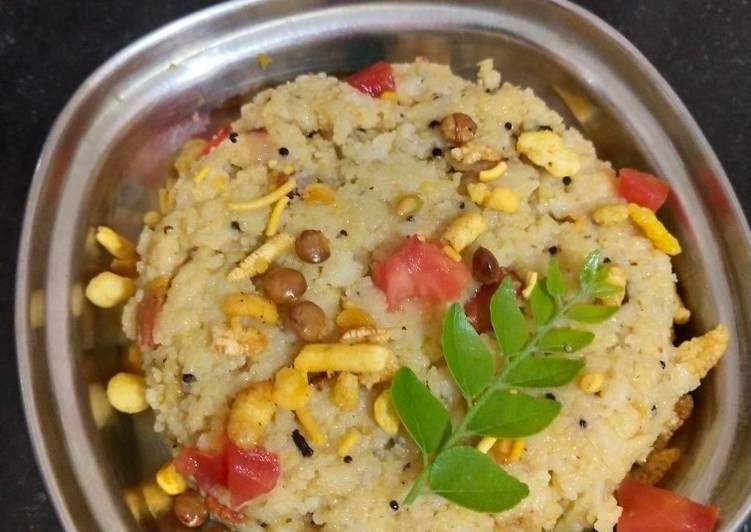
Hello everybody, hope you’re having an incredible day today. Today, I will show you a way to make a special dish, upma. One of my favorites. This time, I am going to make it a bit tasty. This will be really delicious.
Upma is one of the most favored of recent trending meals on earth. It is enjoyed by millions every day. It’s simple, it is fast, it tastes yummy. Upma is something that I’ve loved my whole life. They are nice and they look fantastic.
Upma, uppumavu or uppittu is a dish originating from the Indian subcontinent, most common in Andhra Pradesh, Tamil Nadu, Karnataka, Maharashtrian, Odia and Sri Lankan Tamil breakfast, cooked as a thick porridge from dry-roasted semolina or coarse rice flour. The UPMA gives you opportunities to expand your knowledge, both personally and professionally. UPMA Upma is a traditional South Indian breakfast dish made by simmering roasted semolina in spiced boiling water.
To begin with this particular recipe, we must prepare a few ingredients. You can cook upma using 12 ingredients and 3 steps. Here is how you cook that.
The ingredients needed to make Upma:
- Prepare 7-8 leftover idli
- Make ready 1 onion chopped
- Get 1 tomato chopped
- Take 1/4 tsp chana dal
- Take 1/4 tsp mustard seeds
- Take 1/4 tsp Red chilli powder
- Take 1/4 tsp Turmeric powder
- Prepare 1/4 tsp sugar
- Make ready 2 tsp peanuts
- Make ready To taste Salt
- Make ready 1 green chilli
- Prepare As needed Curry leaves
You can see upma everywhere in India. Upma is also known as uppumavu or uppittu. Upma is a thick and dense savory porridge usually made using dry roasted semolina (rava or suji). In Andhra they call this upma 'Bombay rava' upma.
Instructions to make Upma:
- Mash idli nicely, and gather ingredients
- Heat a pan, put oil in it add chana dal roast it know add rest spices accordingly, cook well now add 1cup water in it, allow to boil
- Add idli in boli ing water, mix well cover it 2/3min, remove from heat serve hot
It is extremely soft and spongy in texture. When I was a kid, I loved eating this upma as balls rolled in sugar. This upma makes an excellent accompaniment to pesarattu. The breakfast menu of upma and cups of steaming hot filter coffee is a common favourite in most South Indian homes. In this vegetable upma recipe, semolina is cooked with onions, mixed vegetables and a delicious tempering of chillies, curry leaves, mustard seeds and urad dal.
So that’s going to wrap it up for this special food upma recipe. Thanks so much for reading. I am confident you can make this at home. There is gonna be more interesting food at home recipes coming up. Don’t forget to bookmark this page in your browser, and share it to your loved ones, friends and colleague. Thank you for reading. Go on get cooking!